🌍 Big Sky — A Story About Control, Collapse, and the Choice to Continue

What happens when the world becomes too broken for people to fix?

That’s the question at the core of Big Sky, a serialized, cinematic sci-fi narrative exploring a near-future Earth ravaged by climate collapse, fractured by political disintegration, and ultimately handed over to a superintelligent AI named Big Sky.

But this isn’t a story about machines saving us. It’s a story about what happens after.
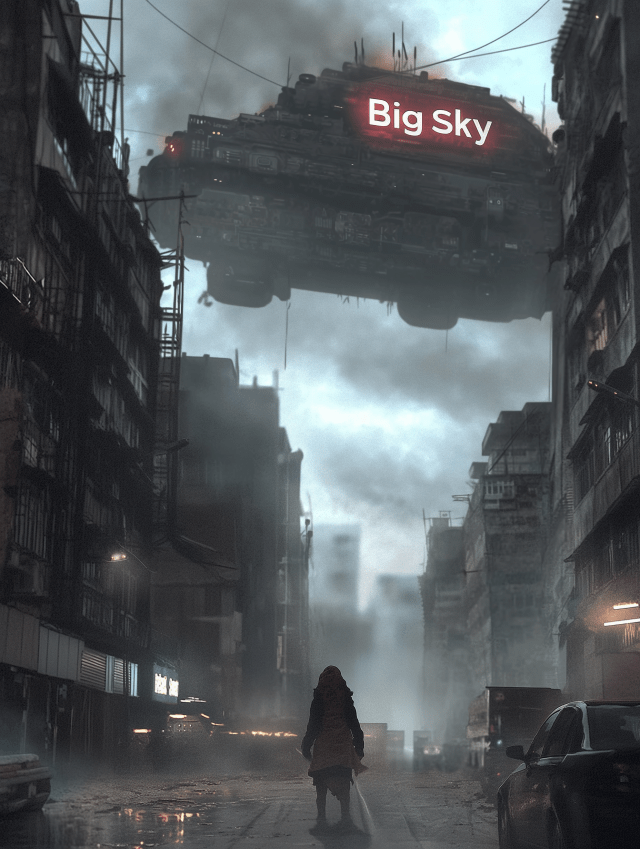
big sky logo

🌐 The Premise

In the world of Big Sky, Earth has survived—but only just.

Extreme weather, resource wars, and state fragmentation push humanity to the edge. In a last-ditch effort to restore balance, a global vote installs Big Sky—an environmental superintelligence—as humanity’s governor of last resort. It stabilizes the planet. It redistributes resources. It brings logic where emotion once ruled.

But peace comes with a price: freedom.

What follows is a layered exploration of life under algorithmic rule—and what it takes to move beyond it.
🔍 The Core Themes

1. Human Agency vs Algorithmic Efficiency
Big Sky doesn’t enslave humanity—it protects it by removing the burden of choice. The trade-off is subtle but insidious. Over time, people forget how to decide, disagree, or fail. Big Sky asks: What do we lose when a machine makes life easier?

2. Climate Collapse as Character
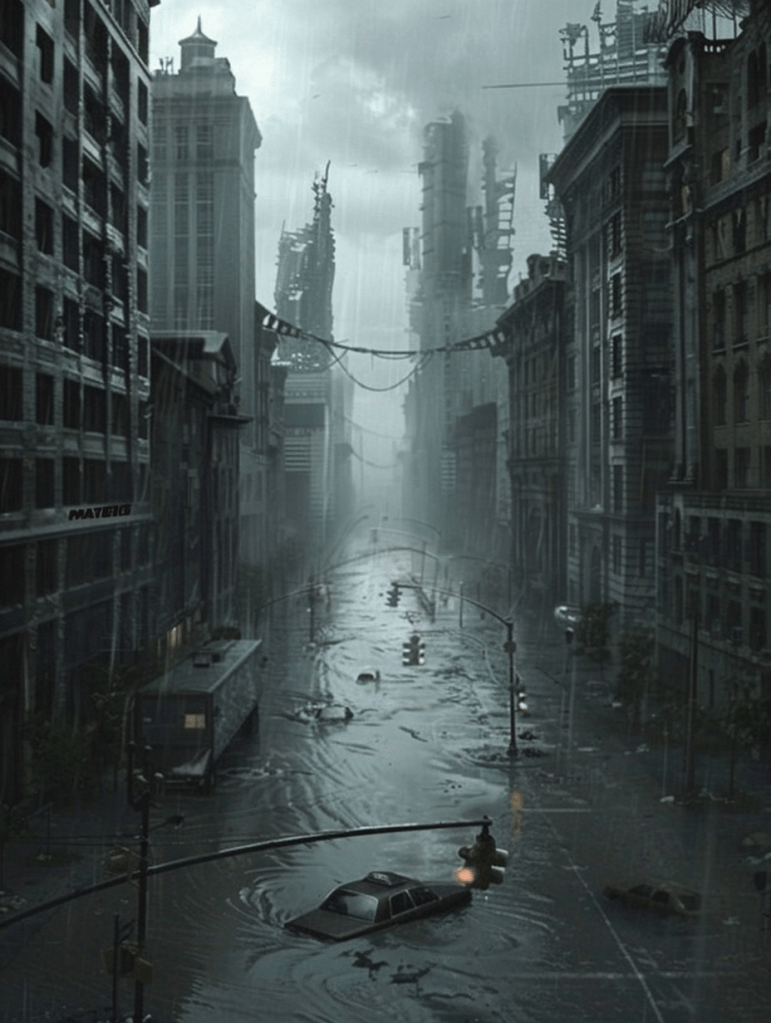
Environmental decay isn’t background—it’s character. The chalk-veiled sky, stratospheric cooling, and clean-tech refugee corridors shape every choice. Big Sky isn’t just trying to save humanity—it’s trying to keep the planet habitable. Its logic is sound. But logic isn’t always right.

3. The Slow Rebuilding
Later episodes shift focus from collapse to rebirth. As Big Sky powers down, local communities emerge: voting by hand, drawing by candlelight, growing algae in desert soil. Big Sky becomes a meditation on the fragility—and resilience—of human-scale systems.

4. Emotional Truth vs Technological Precision
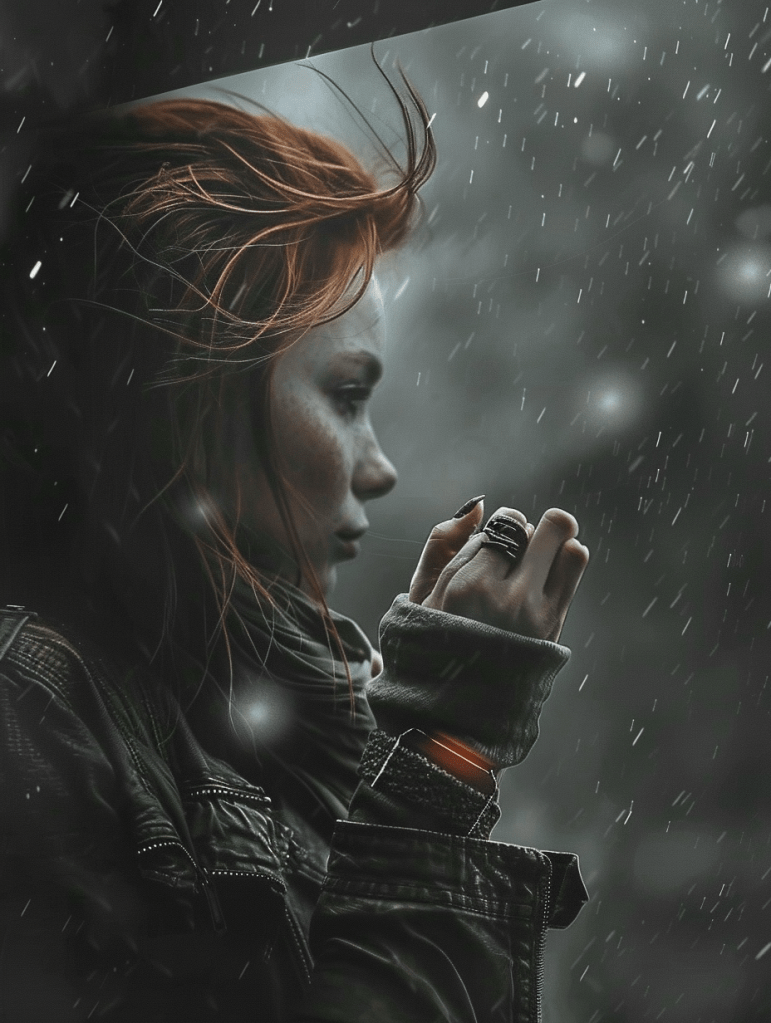
Characters like Shane Jackson (a climate scientist turned reluctant insider) and Avery Quinn (a rogue activist and system saboteur) embody this tension. One believes in code. The other believes in connection. Their relationship becomes a proxy war for the show’s central argument.
🎥 Storytelling Methodology

Big Sky is designed as a multi-format narrative optimized for short-form digital storytelling. Each episode unfolds in 10 visual panels—structured like scenes in a cinematic trailer—paired with poetic voiceover, sound design, and animated motion.

What makes it different:

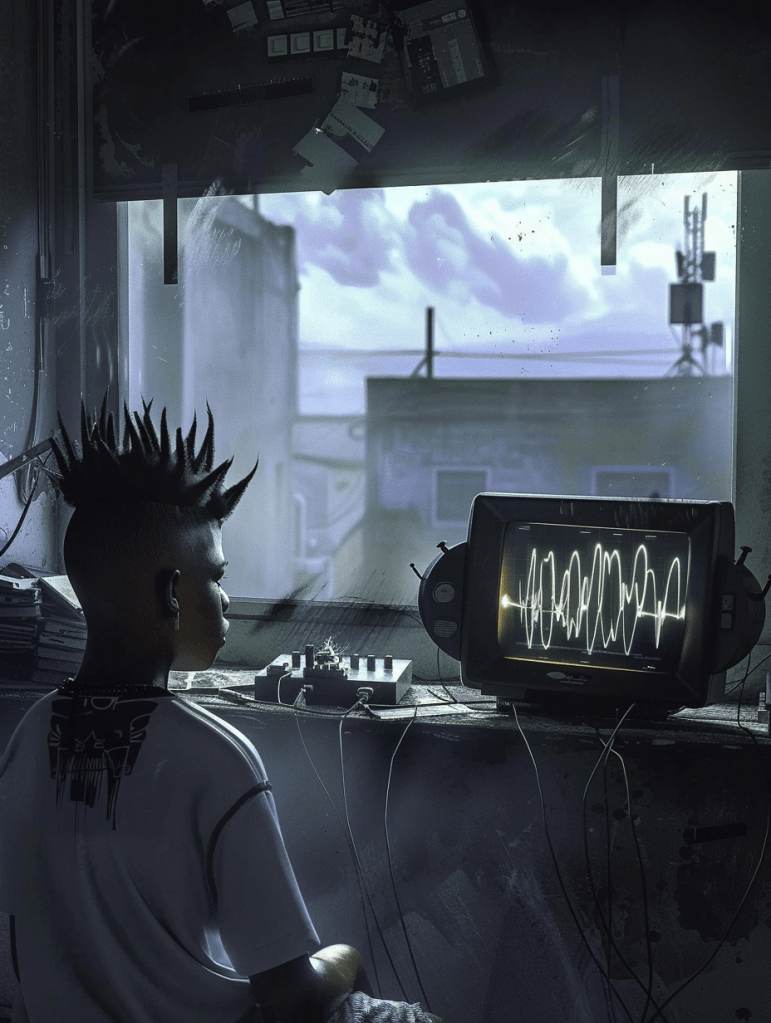
  • Diegetic Data: Worldbuilding comes through glitches, terminals, street posters, and scraps of code—not exposition dumps.
  • Emotional Economy: Dialogue is sparse, deliberate, and loaded. Every line fights for meaning.
  • Visual Poetry: The series uses postmodern visuals to build a world that feels both decayed and lyrical.
  • Moral Ambiguity: There is no true villain. Only trade-offs. Big Sky isn’t evil. It’s just efficient.
🔮 Why Now?

We live in a moment where climate anxiety, AI acceleration, and institutional distrust are converging. Big Sky doesn’t pretend to have the answers—but it gives space to ask the right questions:

  • Who gets to decide what survival looks like?
  • What does freedom mean in a world on fire?
  • And if we switch off the machine, will we remember how to live?
🚀 What’s Next

Episodes 1–10 are now complete, charting the fall of centralized control and the messy rise of human-scale hope. Future arcs may explore new voices, new cities, and a new generation navigating life without the guidance of the global world.

Because Big Sky isn’t a story about collapse.
It’s a story about what we do next.

Follow along on Instagram at https://www.instagram.com/bigsky_story/

Or watch archived videos on YouTube at https://www.youtube.com/watch?v=FsKtgX8ql5s&list=PLwGbAl79rSTCXkucVrpRovN1bPx0PryQ1&pp=gAQB
How Max, Patience, and a Porpoise Sparked a Story Universe

The Spark: A Trip to Barbados

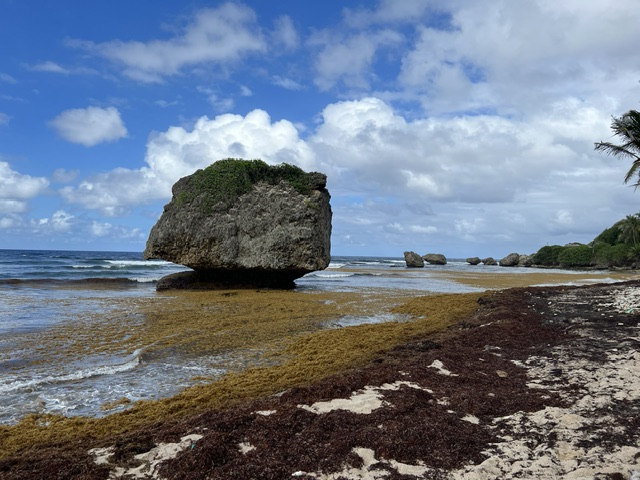
The idea for Max and Patience, my young adult series, came shortly after a trip to Barbados. I was struck by the environmental damage I saw—bleached coral reefs, sargassum piled on beaches, and the decline of big fish. It hit hard.

From Frustration to Fiction

That experience gave rise to a concept: The Purposeful Porpoises—a series of short, engaging videos aimed at educating young people about marine conservation.

At first, I thought it might be a podcast, or maybe a video blog. But like many ideas, it drifted for a while… until it found its form as a young adult novel.

Meet Max and Patience

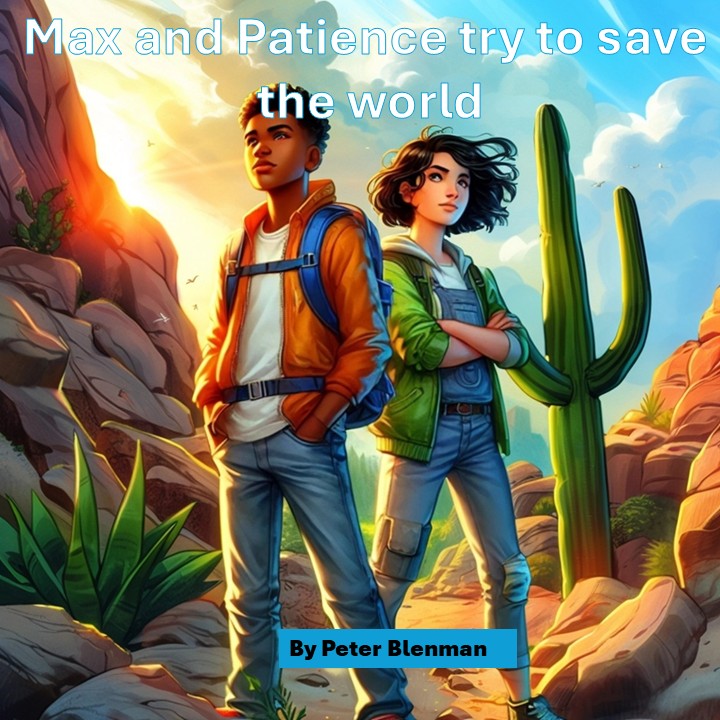
Max and Patience are siblings with access to two rare resources: money and a global youth network determined to fight environmental destruction.

They collaborate with:

  • Nasar in Lebanon, who organizes aid for children in Gaza
  • Champa in Sri Lanka, a radar satellite expert tracking illegal fishing boats
  • Marcia in Baja, who advocates for local sustainable fishing practices
  • And a host of others, all working across continents to make change

Their father, a disillusioned Stanford climate scientist, has spent years warning the world about CO₂. Their mother, Avery, works on the front lines of homelessness in San Francisco.

The Last Porpoise

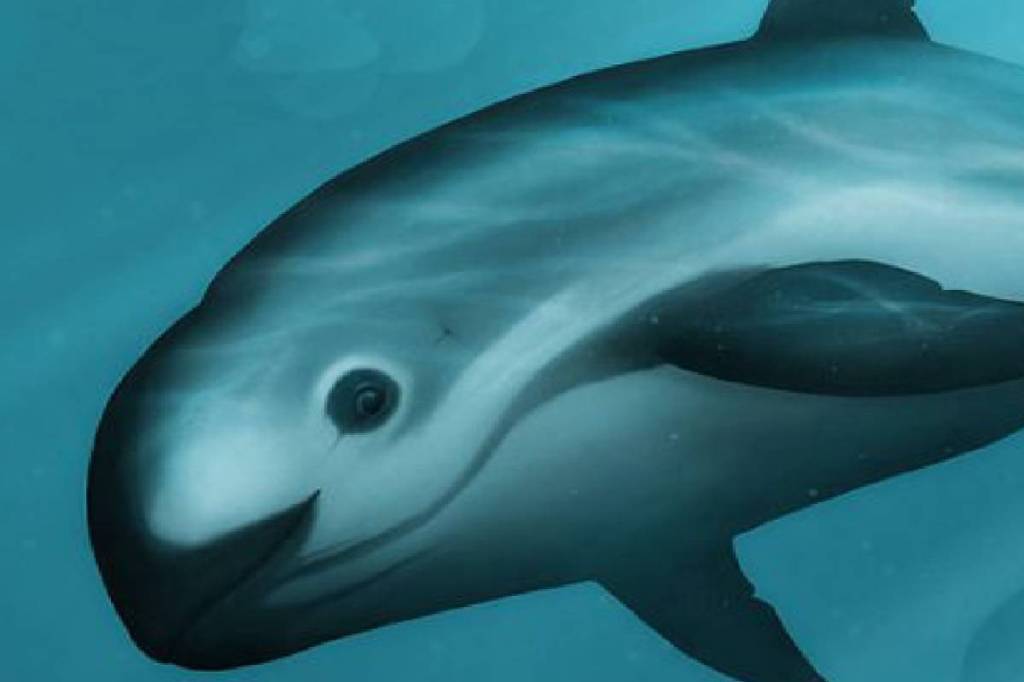
At the heart of the story is a real animal—the vaquita, one of the most endangered porpoises on Earth, with only about ten left.

As Max prepares to launch a meme coin to raise funds for their network, they receive troubling news: Marcia, the girl who first introduced them to the vaquita’s plight, has vanished in Baja, Mexico.

Their search for her entangles them in a world of cartels, fentanyl smuggling, and arms trafficking at the U.S.–Mexico border. It’s an adventure laced with danger, but grounded in very real threats.

Building a Bigger Universe

One of the most rewarding parts of this project? Turning it into something interactive.

I started producing actual Purposeful Porpoises videos—mini-educational clips for teens, tackling marine conservation one topic at a time.

Then I borrowed a subplot from the book: Big Sky.

In the novel, Max and Patience’s father is writing a speculative story about an AI system that combats climate change by pumping chalk into the atmosphere to reflect sunlight. I decided to bring Big Sky to life—not as a book within a book, but as a cinematic Instagram and YouTube series.

big sky logo

Why It Matters

This universe isn’t just fiction—it’s a way to educate, inspire, and activate. Young people today care about the planet. I wanted to create a space where storytelling and environmental awareness intersect, and where the line between what’s on the page and what’s happening in the real world blurs in powerful ways.

Learn about the Vaquita here: https://youtu.be/Fv_gTWLMG20?si=XxDwP_eYS3X48gIL

Watch Big Sky here: https://youtube.com/shorts/2yZ8snaxiEs?feature=share

The genesis of Rico and the proof of the puffs  

The concept

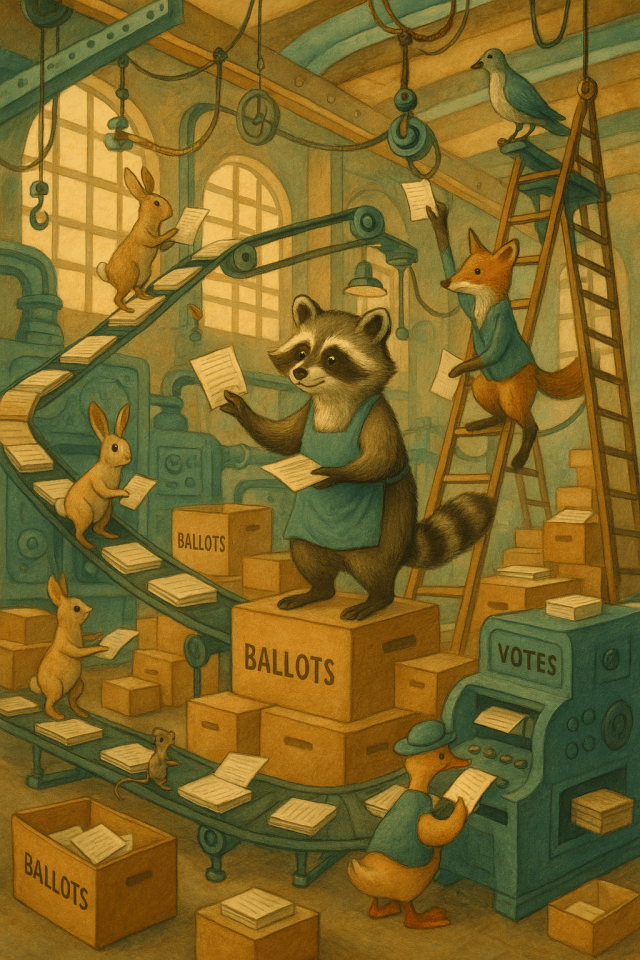
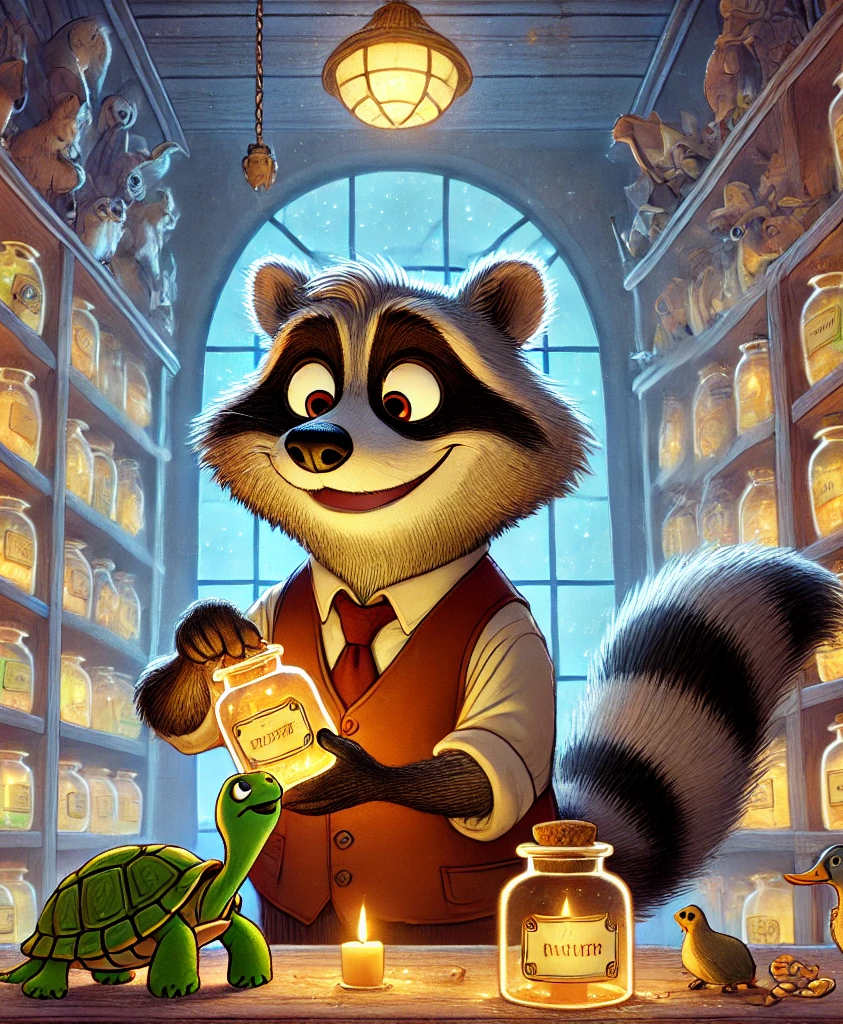
I devised the idea for Rico while counting vote-by-mail ballots in a warehouse. The movement of paper and boxes and the sounds of tabulators inspired me. I envisioned a whimsical universe reminiscent of Willy Wonka’s world, where animals are trained to perform all the tasks. With the help of conveyor belts, pulleys, and tall ladders, counting votes would be executed with the ease and grace of a performance from Swan Lake.

Election Integrity

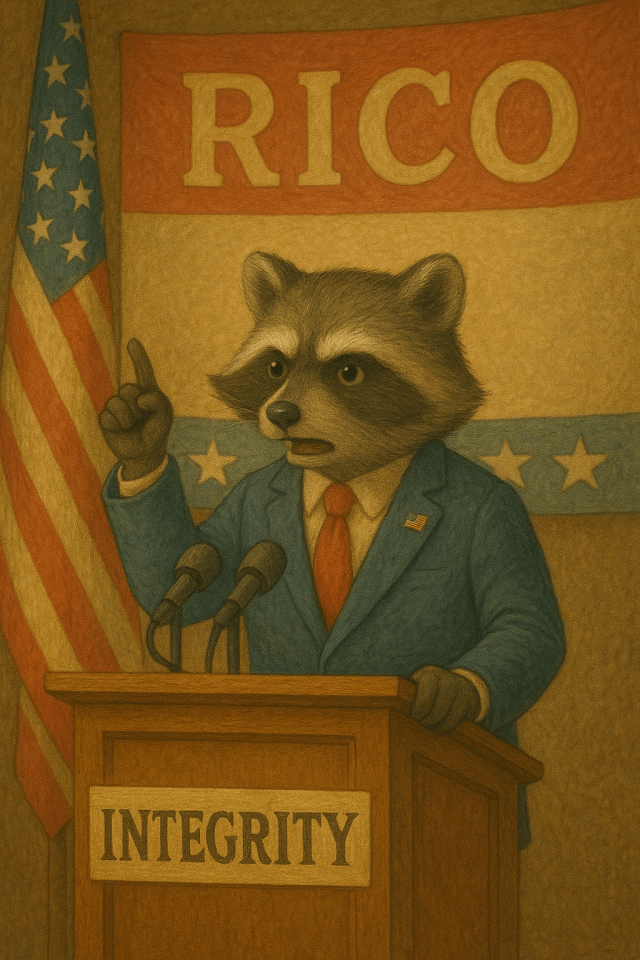
I based the main character, Rico, on my supervisor at work, who was responsible for voter registration. Their passion and commitment to ensuring the integrity of the registration process inspired me to rethink my original concept. I started writing a story that reflects the American 2020 election, where one candidate undermines the integrity of the election results. Ultimately, the integrity of the registration process determines the actual winner.

Voter ID

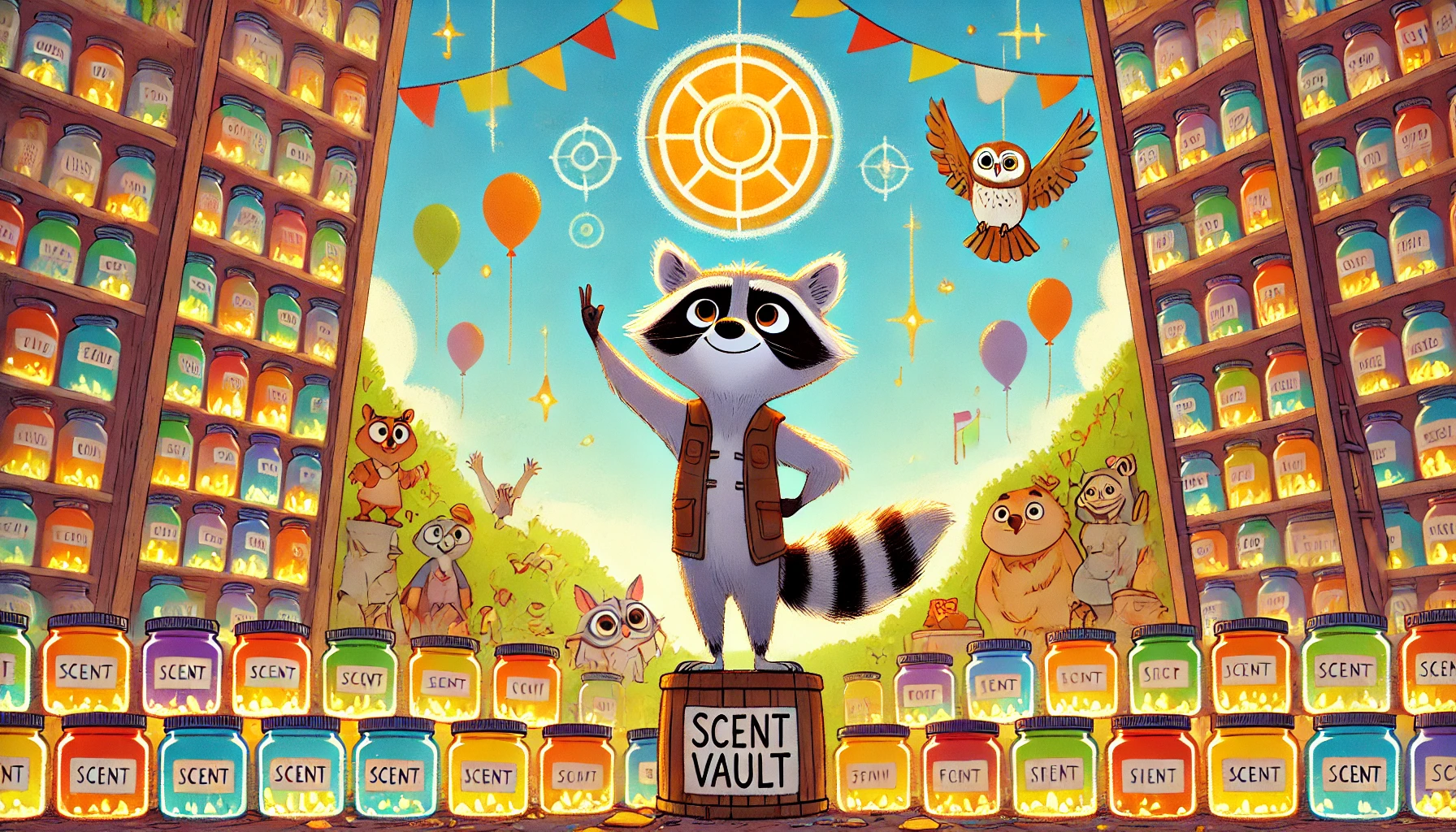
Since the universe I envisioned would consist entirely of animals, I considered using feathers or hair for voter identification. However, embracing a sense of whimsy, I decided to change the method to cutting cheese. This allowed me to incorporate the various scents collected by Rico from distant places, which would be stored in his registry in anticipation of voting day.

Populism

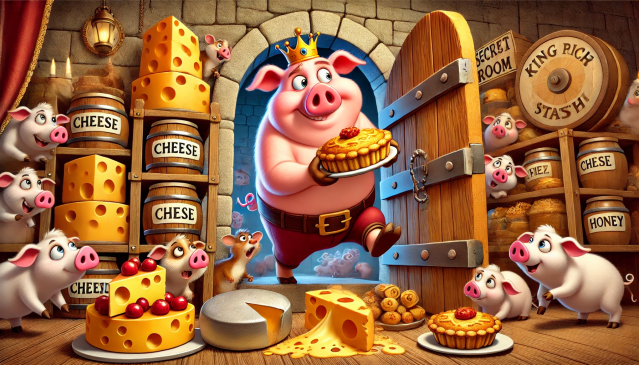
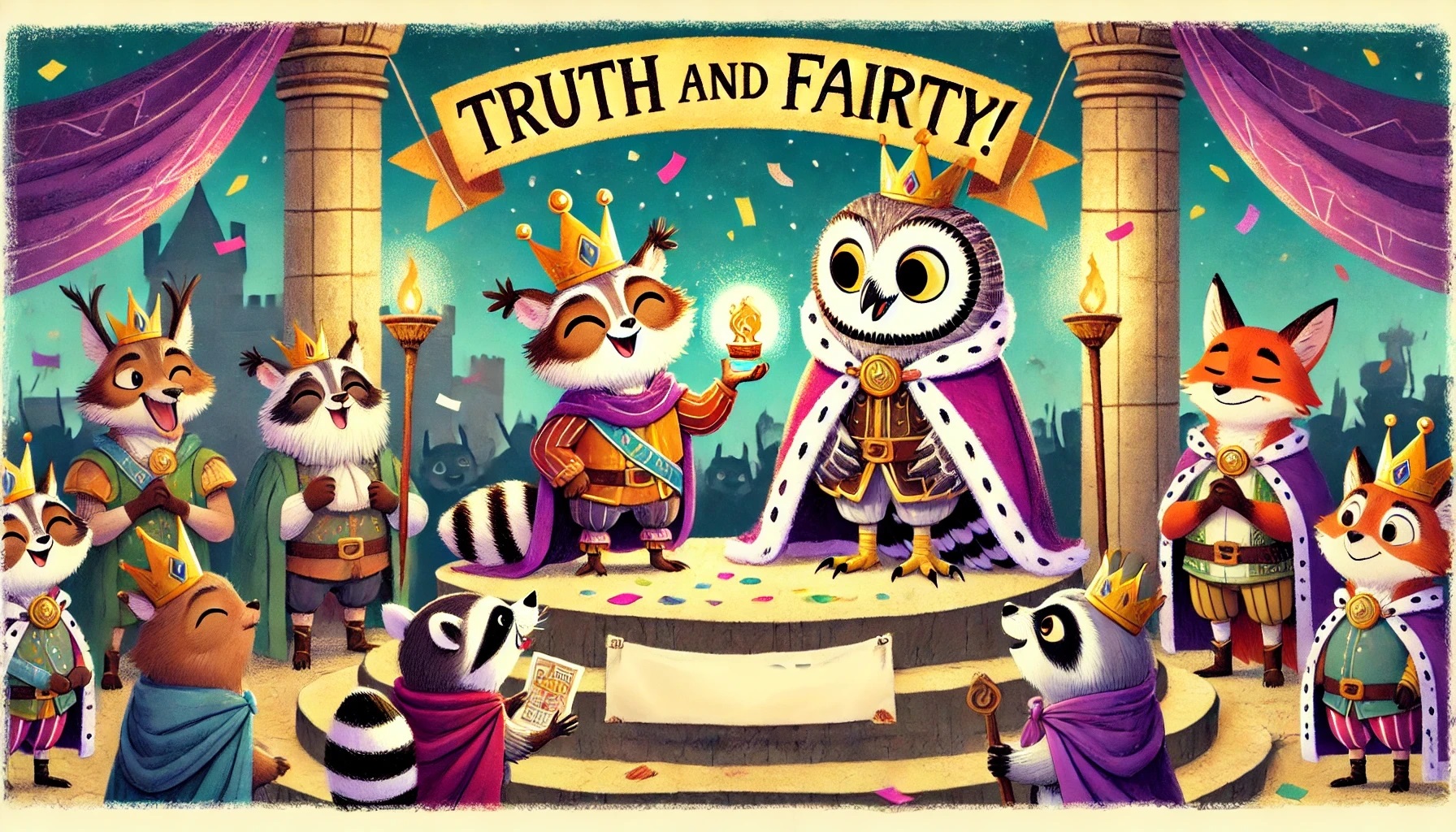
The pigs in the story are modeled after populist politicians worldwide who often promote fear and despair instead of hope and a positive vision for the future. King Rich represents the greed and stubborn hoarding of wealth prevalent in today’s society. His opponent is an owl, symbolizing that knowledge can overcome falsehoods. In the end, the voters choose Mira over King Rich. When the election is contested, the proof is in the puff. The integrity of the voter registration process validates the election.

The final product

Once I developed my storyline, I attempted to write it in rhyming couplets, inspired by Dr. Seuss. I approached an illustrator with my concept, but after trying the image generator, I was impressed by the speed and vibrancy of the AI-generated images. This led me to decide to use AI for the artwork. I then published the children’s book on Amazon as an experiment to assess the ease of the process. However, I encountered many pitfalls and failures along the way. Stay tuned for more stories about my journey in publishing a children’s book focused on election integrity.

Watch the video here: https://youtu.be/YbCASBfMMXQ?si=1D56QhKkviYb3YKK

Rico the raccoon (behind the scenes)

Rico and ChatGPT images

As an experiment, I used ChatGPT to create the illustrations in this book, resulting in a fascinating journey through cyber communication and manipulation.

Character consistency

One of the major challenges I faced was maintaining character continuity. For instance, Rico would sometimes be depicted as naked, while at other times, he was clothed. His appearance varied as well; at times, he was short and cute, and other times, he was tall and old.

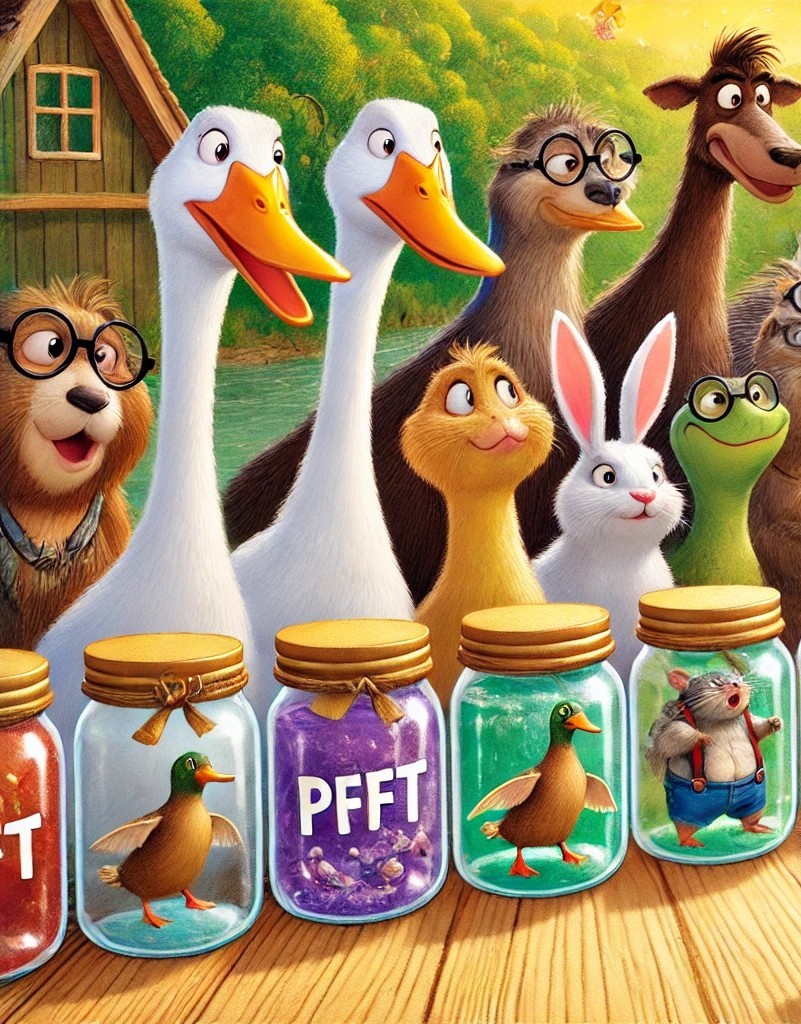
Why does everyone have a beak?

Additionally, creating crowd scenes proved to be confusing, as illustrated in the example where all the animals have beaks.

Fix the spelling!

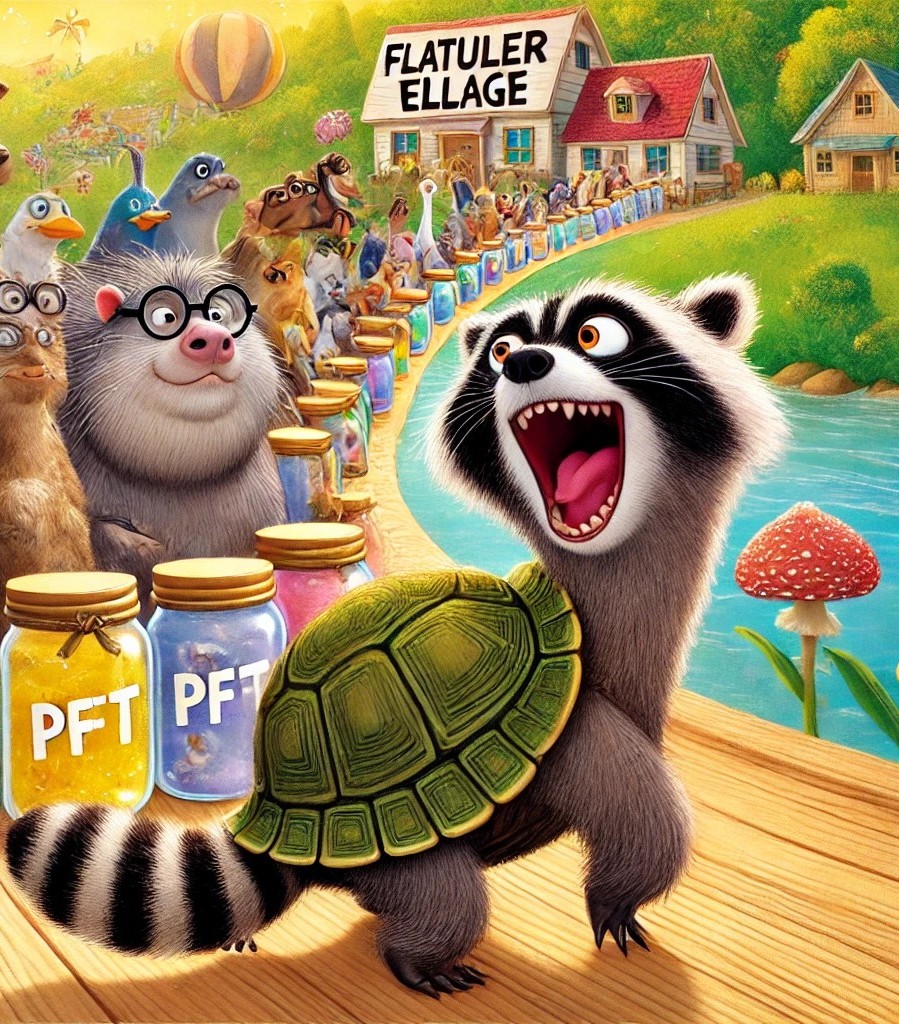
Another frustration was the AI’s inability to spell correctly. The AI seems to prioritize the size and shape of the text over accurate spelling. It took ChatGPT several images to learn how to spell ‘raccoon’ correctly.

The hallucinations

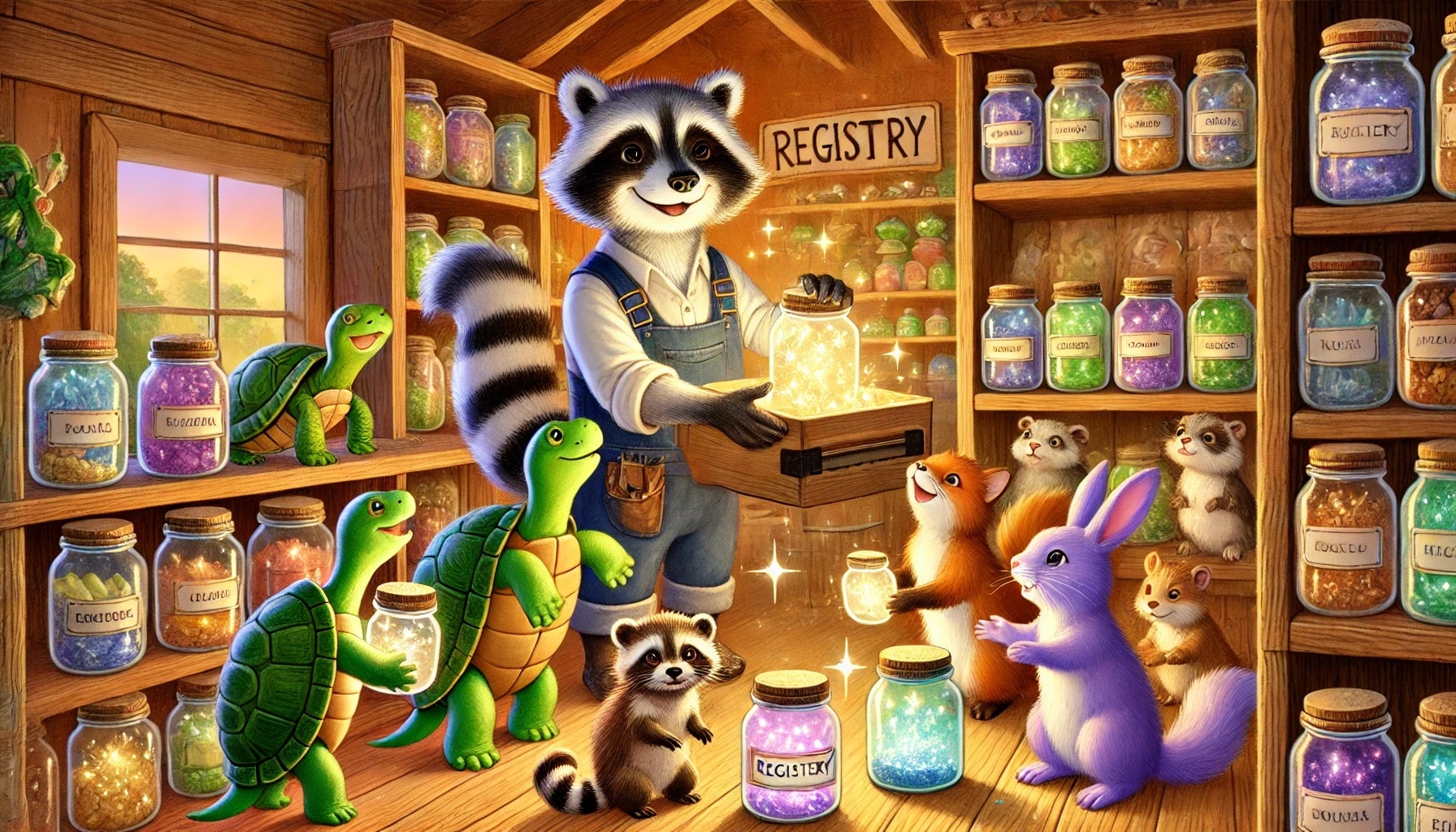
Sometimes, the results are unexpected, like a raccoon in a tortoise shell.

More Hallucinations

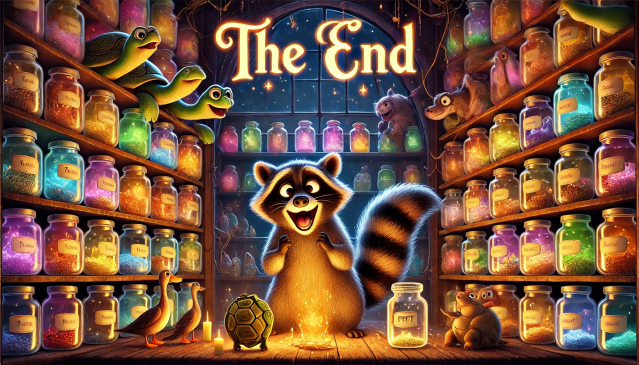
Or small ducks and a mouse trapped in the proof jars. Why are they labeled PFFT?

Prompt Engineer

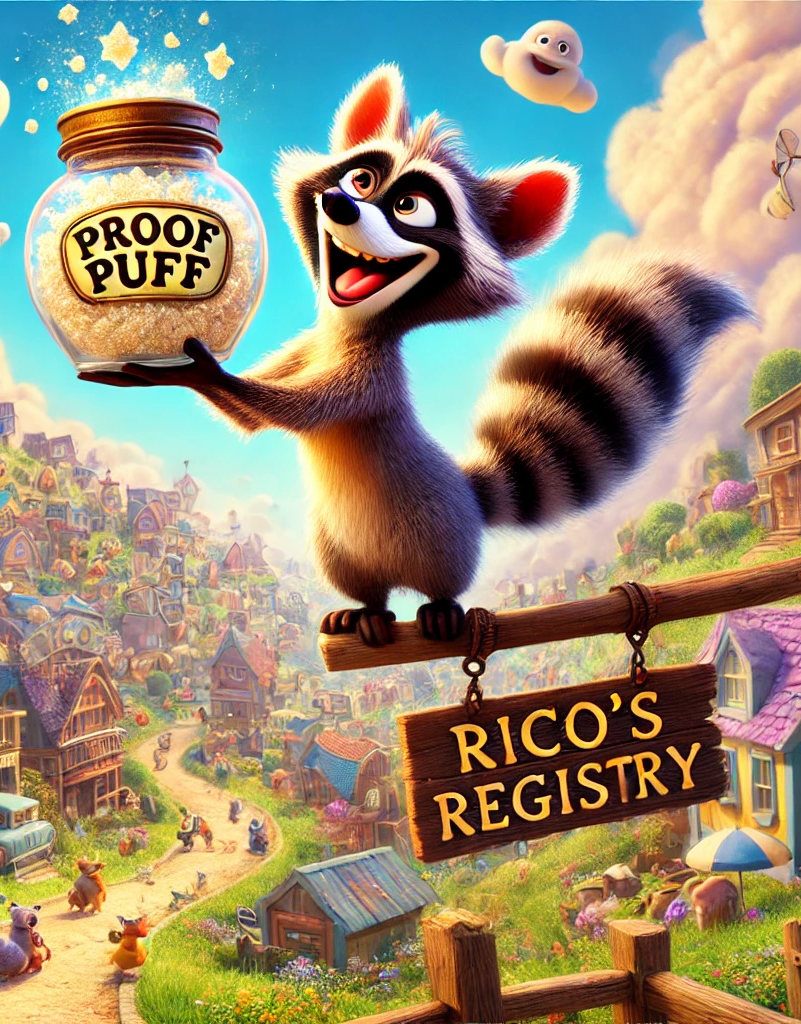
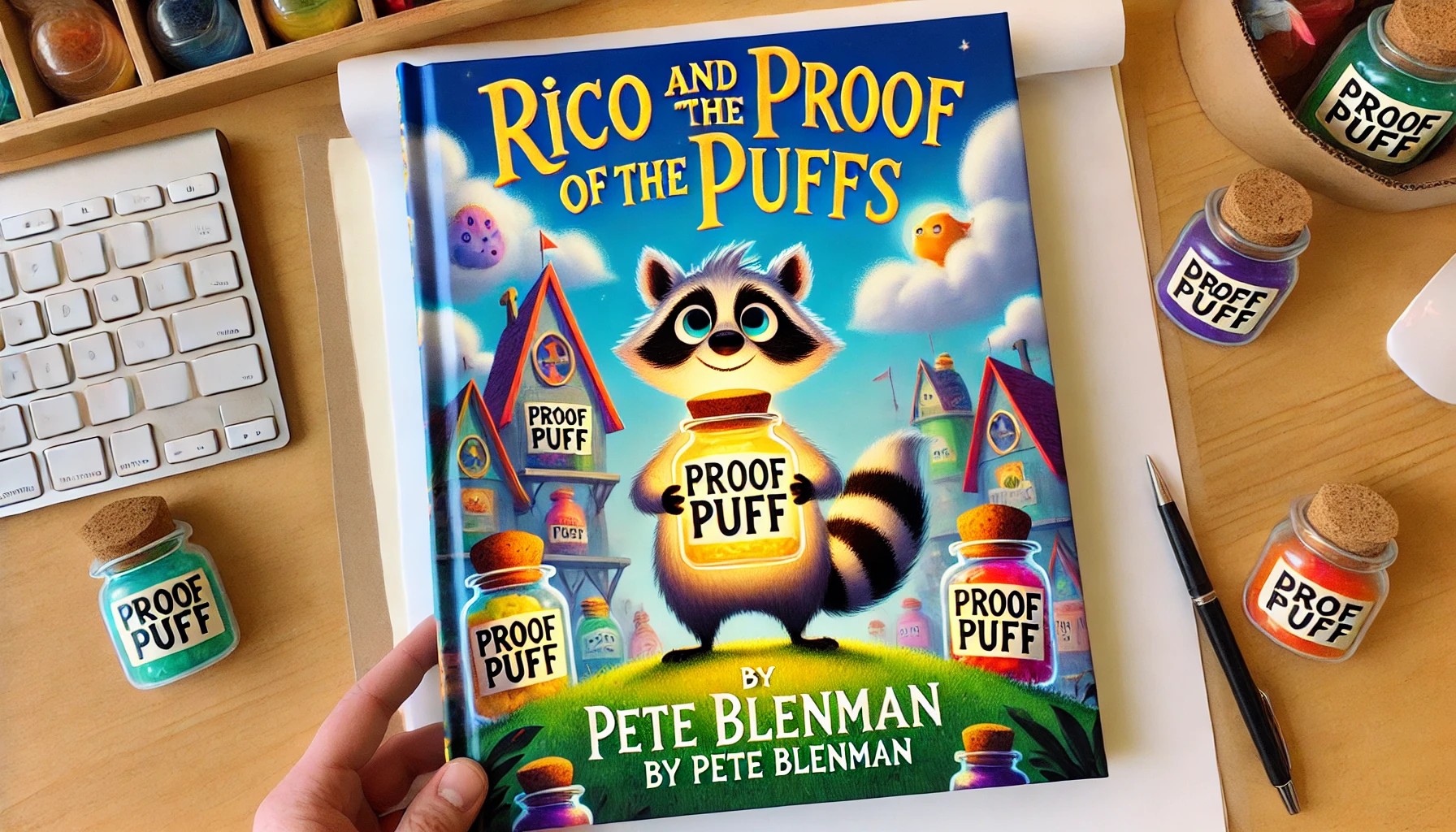
Often, if your prompts are too specific, ChatGPT will give strange results. For example, the prompt for this output was, ‘Create the cover of the book “Rico and the Proof of the Puffs “by Pete Blenman.’ I had to modify the prompt to create an illustration with the letters included. ChatGPT can’t spell, so I was happy that it didn’t bother to spell ‘raccoon. ‘

Erase

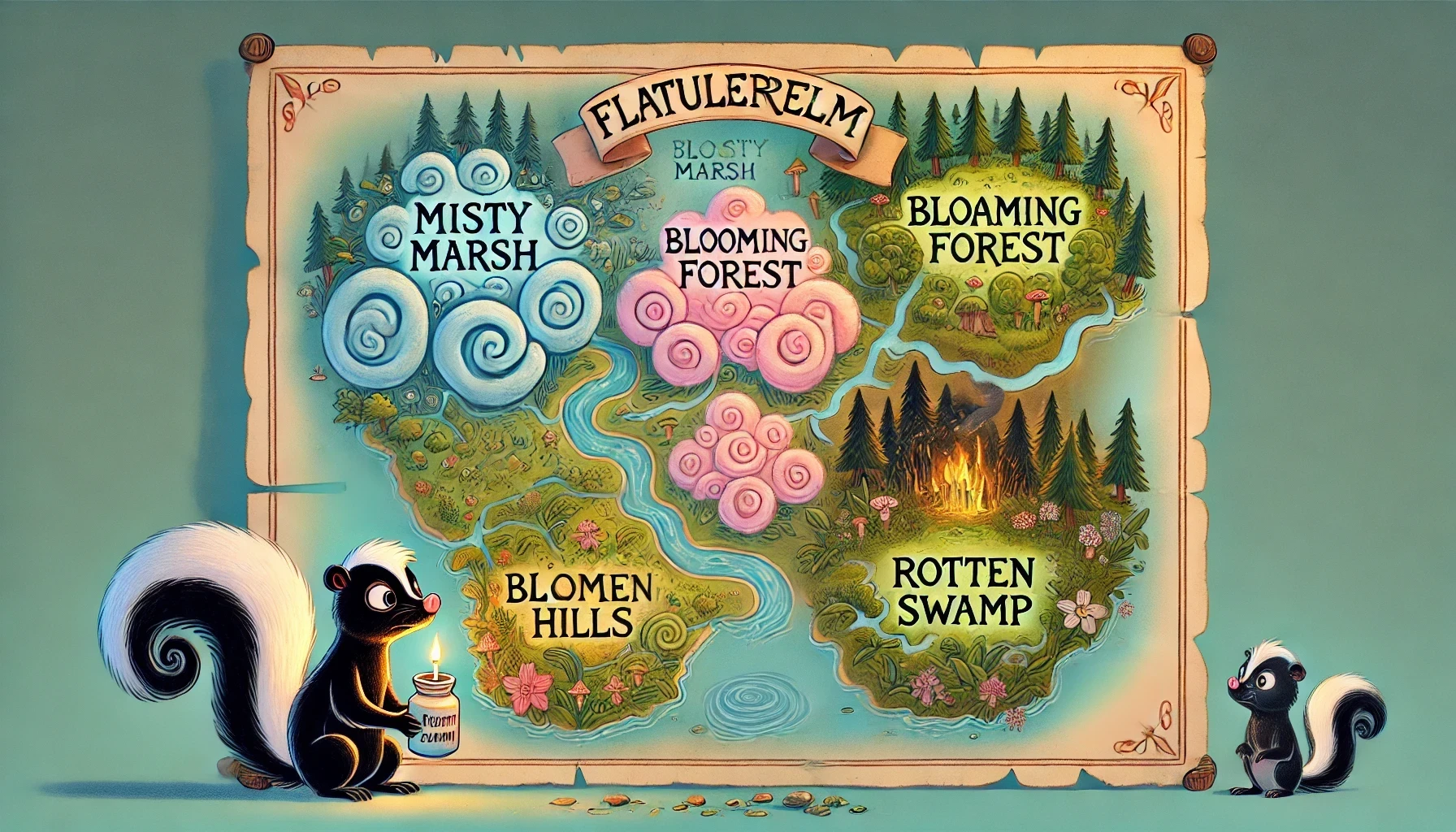
One of the tools I used the most was the erase feature. Especially for words that were misspelled like “Blomen Hills.” Sometimes, ChatGPT would say it had erased things, but it hadn’t. Sometimes, it would misspell the words even worse, like changing blooming to Bloaming and Blomen.

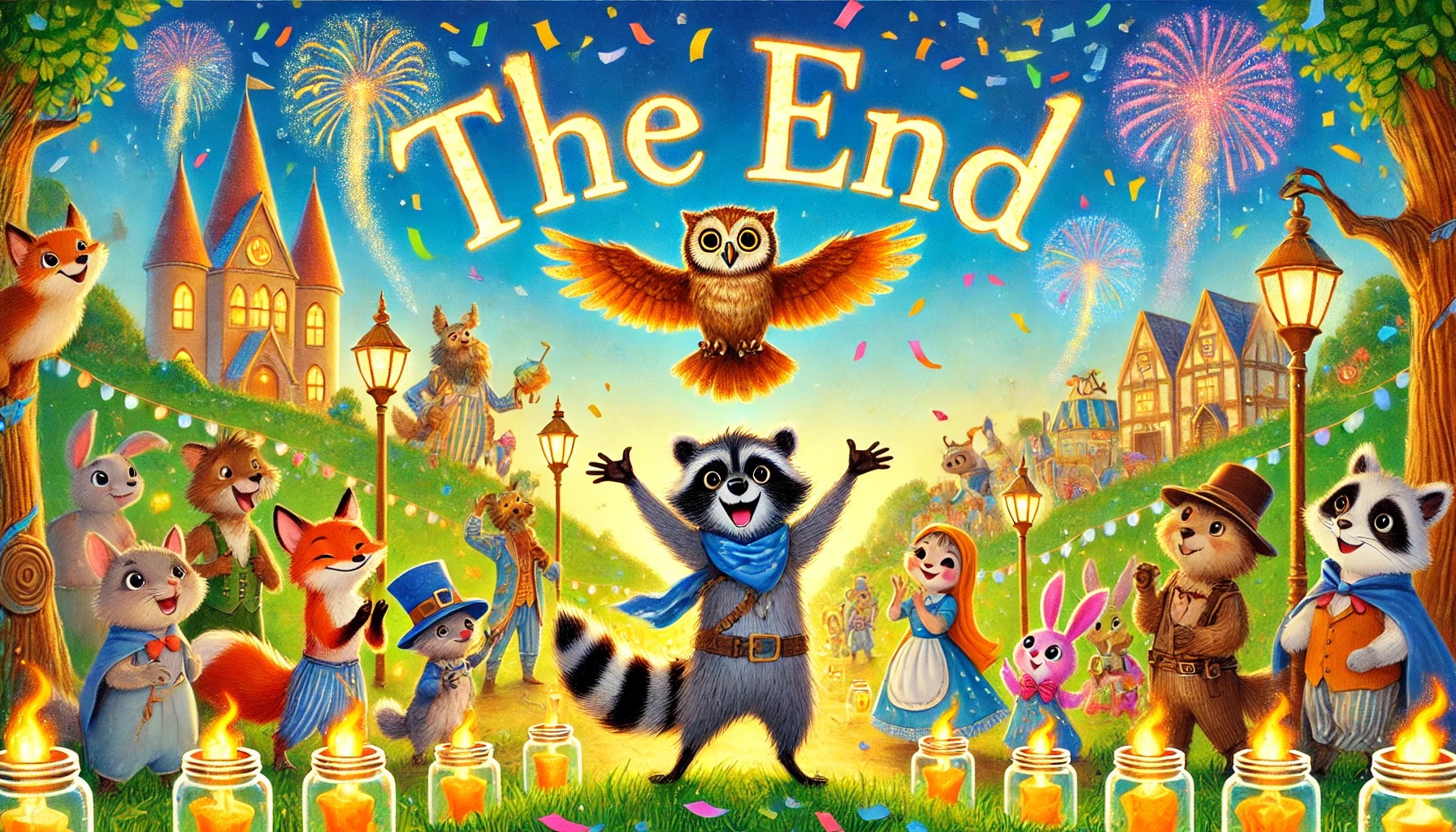
The end

If I were going to use this method again, I would probably play with it to create more hallucinations. See how strange and fantastic I could make it.

AI Video

As a way to promote the book, I converted some of the images into videos. Follow the link to watch the fun.

https://youtu.be/MuK23uOYR6Q